
Ebola.....the next Plandemic?
Ebola, Supportive Care, and the WHO’s Nutritional Blind Spot: My Critique

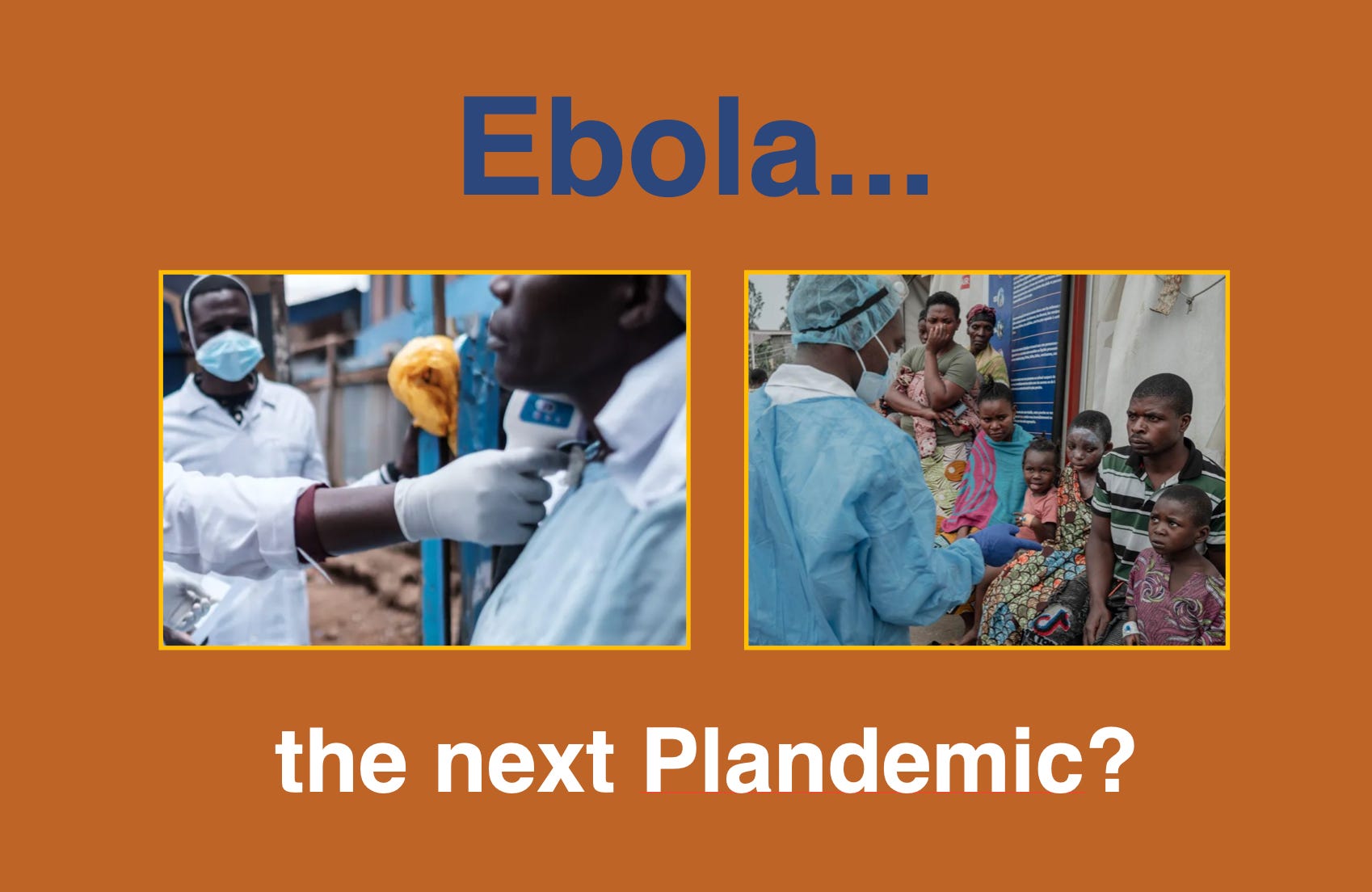
Ebola, Supportive Care, and the WHO’s Nutritional Blind Spot: My Critique
The World Health Organization has spent decades speaking the language of “supportive care” in Ebola outbreaks. It has repeatedly stated that early intensive supportive care, rehydration, treatment of symptoms, infection prevention, surveillance, contact tracing, safe burials, vaccination where relevant, and social mobilisation are central to outbreak control. That is formally correct. WHO’s own Ebola fact sheet says early intensive supportive care with rehydration and treatment of symptoms improves survival, while also acknowledging that approved vaccines and treatments are available only for Ebola virus disease caused by Zaire ebolavirus, not for other major Ebola diseases such as Sudan virus disease or Bundibugyo virus disease.
But the scandal is not what WHO says. The scandal is what it has failed to pursue with adequate seriousness.
For a disease characterised by shock, vascular leak, diarrhoeal fluid loss, vomiting, oxidative stress, immune collapse, endothelial injury, coagulopathy, hepatic injury, catabolism, and profound metabolic exhaustion, WHO’s approach to nutritional medicine has remained astonishingly thin. It has acknowledged nutrition, yes. It has issued interim guidance, yes. It has listed low-dose vitamins in essential medicines contexts, yes. But it has not treated nutritional status as a serious therapeutic domain worthy of urgent, systematic, mechanistic, prospective research.
That is not a minor omission. It is a failure of imagination, a failure of clinical curiosity, and, arguably, a failure of duty.
The poverty of the phrase “supportive care”
The term “supportive care” should be one of the most important phrases in Ebola medicine.
In severe infections, supportive care is not passive. It is not merely sitting beside the patient while the disease runs its course. It is active physiology. It is hydration, electrolyte correction, renal protection, acid-base support, oxygenation, blood pressure support, glucose control, nutrition, micronutrient repletion, nursing intensity, prevention of secondary infection, management of diarrhoea and vomiting, and preservation of vascular and immune function.
Yet in WHO-style outbreak medicine, “supportive care” too often becomes a bland bureaucratic container. It sounds comprehensive, but its details are frequently underdeveloped. It becomes a slogan rather than a disciplined clinical architecture.
WHO’s Ebola material correctly states that supportive care improves survival. But the obvious next question is:
what exactly constitutes optimal supportive care in a disease of such extreme metabolic and vascular violence?
Is it enough to rehydrate?
Is it enough to correct electrolytes?
Is it enough to provide calories?
Is it enough to isolate the patient and wait?
Where is the aggressive biochemical mapping of the host response?
Where are the serial measurements of vitamin C, vitamin D, zinc, selenium, magnesium, vitamin A, thiamine, other B-complex vitamins, albumin, prealbumin, essential fatty acids, glutathione status, oxidative stress markers, endothelial injury markers, and inflammatory mediators?
Where are the pragmatic trials of nutrient repletion?
Where is the urgency?
The answer is deeply unsatisfactory. The WHO has not led this field with the seriousness it deserves.
The WHO has recognised nutrition — but weakly
To be fair, The WHO did not entirely ignore nutrition. WHO, UNICEF, and the World Food Programme produced interim guidance in 2014 on nutritional care for children and adults with Ebola virus disease in treatment centres. WHO’s nutrition page says the 2014 guideline laid out basic principles of optimal nutritional care during treatment and convalescence in Ebola treatment units and related care centres.
A later review of nutritional care for patients with Ebola virus disease describes that 2014 WHO/UNICEF/WFP guidance as being based on existing WHO guidance adapted to the Ebola crisis, plus a rapid literature review on Ebola and nutritional management.
But that is precisely the problem. It was adaptation. It was interim. It was generalised. It was not a bold research programme. It did not become a serious global agenda to define the biochemical requirements of survival in Ebola disease.
The WHO response to nutrition in Ebola has largely treated nutrients as maintenance requirements — as daily allowances, food support, feeding protocols, and practical field logistics. Those things are necessary. But they are just not enough.
Ebola is not ordinary starvation. Ebola is a catastrophic infectious, inflammatory, vascular, gastrointestinal, hepatic, and immunological crisis. In that setting, the patient’s nutritional requirements may not resemble normal daily maintenance requirements. Severe infection can produce acute depletion, redistribution, urinary loss, gastrointestinal loss, oxidative consumption, and functional deficiency. The body in Ebola is not simply hungry. It is under biochemical siege.
A sophisticated organisation would ask: what nutrients are being consumed, lost, depleted, or functionally impaired during this siege? WHO has not answered that question with anything approaching the necessary intensity.
The vitamin A signal should have been a wake-up call
There is already Ebola-specific evidence that micronutrients may matter. A study on vitamin A supplementation in Ebola virus disease reported that early vitamin A supplementation was associated with reduced mortality and concluded that it should be further studied and considered for future use.
Another report summarising the findings stated that mortality was lower among patients treated with vitamin A than among those not treated, although the effect was not seen when patients were already receiving multivitamins containing vitamin A.
This should have electrified the global health establishment. Not because vitamin A is a magic bullet. Not because association proves causation. Not because Ebola can be reduced to one nutrient. But because it was a clear clinical signal that micronutrient biology might influence survival.
The correct response should have been immediate and systematic:
Measure vitamin A status prospectively.
Measure other nutrients prospectively.
Stratify by viral load, age, pregnancy, diarrhoeal severity, shock, coagulopathy, hepatic injury, and nutritional status.
Run pragmatic adaptive trials.
Test multinutrient protocols.
Compare timing.
Compare oral versus parenteral delivery.
Establish minimum nutritional emergency standards for Ebola treatment units.
Develop outbreak-ready nutritional research kits.
Create protocols for high-risk contacts.
Integrate biochemical surveillance into case management.
Consult with the experts in Nutritional Medicine globally.
Instead, the matter remained peripheral.
The message seems to have been: “Interesting, but not central.”
That attitude is indefensible.
The multivitamin evidence was also neglected
An international multisite cohort study reported that early multivitamin supplementation was associated with lower overall mortality among patients with Ebola virus disease, while also calling for further research into the impact of micronutrient supplementation in EVD.
Again, this was not definitive proof. It was retrospective. It was not a randomised controlled trial. It could be confounded by clinical care differences, availability of supplies, timing, severity, or centre-level factors. But in an emergency disease with high mortality, such a finding should not be filed away as a curiosity.
It should have triggered a disciplined, WHO-led research agenda.
Instead, the global machinery remained overwhelmingly preoccupied with vaccines, monoclonal antibodies, diagnostics, containment, contact tracing, and conventional emergency logistics. Those are all important. But the neglect of host resilience is glaring.
In Ebola, as in many infectious diseases, the pathogen is only one side of the equation. The host is the other. WHO has been far too pathogen-centred and insufficiently host-centred.
Ebola exposes the narrowness of modern global health
The modern global health establishment tends to think in terms of pathogens, products, and programmes. It is comfortable with vaccines. It is comfortable with monoclonal antibodies. It is comfortable with surveillance dashboards. It is comfortable with emergency declarations. It is comfortable with logistics chains. It is comfortable with committees.
It is much less comfortable with the idea that the nutritional and metabolic condition of the host may be decisive.
This is a deep philosophical defect.
It reflects the pharmaceuticalisation of public health. The dominant question becomes: what product can be deployed against the pathogen? The neglected question is: what biological condition does the patient need in order to survive the infection?
Covid should have forced that question into the centre of policy. It did not.
The patient with Ebola is not merely a carrier of viral particles. The patient is a living organism undergoing catastrophic systemic stress. The vascular endothelium is injured. The gut is inflamed. The liver is compromised. The immune system is dysregulated. The patient may be vomiting, having diarrhoea, losing fluids, losing electrolytes, losing appetite, losing lean mass, and losing physiological reserve. In such a condition, nutrition is not a side issue. Nutrition is part of the battlefield.
To relegate it to ordinary food support and low-level supplementation is clinically primitive.
Vitamin C: the glaring omission
Vitamin C is the most obvious example of WHO’s lack of imagination in Ebola supportive care.
Ebola disease can involve endothelial injury, vascular leak, shock, coagulopathy, inflammation, oxidative stress, hepatic injury, gastrointestinal losses, and sometimes bleeding. Vitamin C is required for collagen synthesis, vascular integrity, immune-cell function, antioxidant defence, catecholamine synthesis, endothelial function, and wound repair. Severe vitamin C deficiency causes vascular fragility and bleeding manifestations. That does not mean Ebola is scurvy; it is not. Ebola is a viral haemorrhagic fever caused by an orthoebolavirus. But the overlap in vascular pathology should have made vitamin C status an urgent research target.
Where are the WHO-led trials of intravenous vitamin C in Ebola?
Where are the serial plasma and white blood cell ascorbate measurements in acute Ebola disease?
Where are the correlations between ascorbate status, viral load, lactate, shock, endothelial injury, coagulopathy, diarrhoeal loss, and survival?
Where are the stratified studies comparing oral repletion with intravenous repletion?
Where are the field protocols for identifying severe depletion?
Where is the sense of urgency?
To my knowledge, no serious clinical Ebola programme has established high-dose intravenous vitamin C as a tested adjunctive therapy. That does not prove it works. But it does prove something damning: the question has not been pursued with the seriousness it deserves.
WHO may reply that there is insufficient evidence. But that is a circular defence. There is insufficient evidence because the institution with the global mandate has not made sufficient effort to generate it.
For an inexpensive, biologically plausible, potentially field-relevant intervention, that is an extraordinary failure.
Zinc, vitamin D, selenium, magnesium, and thiamine: the same pattern
The same criticism applies to zinc. Zinc is central to innate and adaptive immunity, epithelial integrity, T-cell function, antiviral defence, wound healing, and inflammatory regulation. Zinc deficiency is common in many low-income populations and may be worsened by diarrhoea, malnutrition, pregnancy, infection, and poor dietary diversity. Yet there is no serious WHO-led Ebola research programme that places zinc status at the centre of clinical risk stratification.
Vitamin D is another example. It influences innate immunity, antimicrobial peptides, immune regulation, epithelial barrier function, and inflammatory balance. Many African populations have documented vitamin D deficiency or insufficiency, despite high sunlight availability, because skin pigmentation, indoor living, urbanisation, clothing, diet, infection, inflammation, and poverty all matter. Yet again, vitamin D has not been treated as a serious Ebola outcome variable.
Selenium matters for antioxidant enzymes and viral immunity. Magnesium matters for energy metabolism, vascular tone, and inflammatory regulation. Thiamine matters in shock, lactic acidosis, mitochondrial function, and critical illness. Protein-energy malnutrition and hypoalbuminaemia may influence fluid balance, immune competence, drug distribution, and recovery.
Where is the integrated WHO nutritional-immunological model of Ebola severity?
It does not exist in any adequate form.
WHO’s language is correct, but its priorities are incomplete
WHO’s official Ebola language is careful. It says outbreak control requires a package of interventions, including intensive supportive care, infection prevention, surveillance, contact tracing, laboratory services, safe burials, vaccination if relevant, and social mobilisation.
No serious critic should deny the importance of these measures. Infection control saves lives. Contact tracing saves lives. Safe burials save lives. Vaccination for Zaire Ebola saves lives. Monoclonal antibodies for Zaire Ebola save lives. Laboratory confirmation saves lives. Rehydration saves lives.
But a package with missing components is still incomplete.
If “supportive care” does not include serious nutritional biochemistry, it is underdeveloped supportive care.
If “treatment of symptoms” does not include metabolic correction, it is incomplete treatment.
If “clinical management” does not measure nutritional depletion, it is partly blind.
If “research and development” excludes inexpensive non-patentable interventions, it is structurally biased.
The problem is not that WHO says nothing about nutrition. The problem is that what it says is far too weak, too general, too timid, and too detached from the mechanistic reality of severe viral disease.
The vaccine-and-antibody imbalance
The imbalance is especially stark when compared with the energy devoted to vaccines and monoclonal antibodies.
For Zaire Ebola, vaccines and monoclonal antibodies represent major advances. WHO notes that approved vaccines and treatments exist for Ebola virus disease caused by Ebola virus but not for other Ebola diseases. That is a crucial success - but also a revealing limitation.
The current 2026 Bundibugyo outbreak has highlighted this vulnerability. Reports from WHO and major news organisations describe an outbreak in DRC and Uganda involving Bundibugyo virus, a strain without approved vaccines or specific therapeutics.
This is exactly the kind of situation where high-quality supportive care becomes even more important. If there is no licensed vaccine and no specific antiviral or monoclonal antibody therapy for the causative Ebola species, then survival depends heavily on early detection, infection control, nursing, rehydration, organ support, and host resilience.
And yet the nutritional component of host resilience remains scandalously underdeveloped.
The irony is severe: WHO repeatedly acknowledges that supportive care improves survival, but it has not sufficiently defined the nutritional architecture of that supportive care.
A bureaucratic culture hostile to cheap answers
One cannot avoid the uncomfortable question: would WHO have paid more attention if vitamin C, zinc, vitamin D, selenium, magnesium, thiamine, or multinutrient protocols were expensive proprietary products?
This is not to accuse every WHO official of bad faith. Many field workers are courageous, exhausted, and sincere. Many WHO clinicians and epidemiologists have worked under dangerous conditions. The critique here is institutional, not personal.
But global health funding is not neutral. Research priorities are shaped by prestige, patents, donors, institutions, regulatory pathways, and the pharmaceutical imagination. Vaccines and biologics attract attention. Sophisticated platforms attract grants. Proprietary countermeasures attract industry. Low-cost nutritional therapies do not.
The result is a grotesque imbalance: the world will mobilise immense resources to study high-technology products, while leaving basic questions of host nutritional resilience underexamined.
That is not science. That is a hierarchy of attention shaped by money, prestige, and institutional habit.
The defence of “insufficient evidence” is not good enough
WHO can always say: “There is insufficient evidence to recommend high-dose vitamin C, zinc, vitamin D, selenium, or other targeted supplementation as Ebola treatment.”
Strictly speaking, that is true. The medical authorities around the world have been echoing the phrase “insufficient evidence” for decades. There is insufficient high-quality Ebola-specific evidence to claim these interventions are proven therapies.
But this defence is inadequate because WHO is not merely a passive reviewer of evidence. It is supposed to be a leader in generating, coordinating, and prioritising evidence during global health emergencies.
If a question is biologically plausible, inexpensive, safe when properly used, logistically feasible, and potentially relevant to survival, then lack of evidence should trigger research — not institutional indifference.
The proper WHO response should be:
“We do not yet know whether targeted nutritional therapy reduces Ebola mortality. Therefore, we will urgently establish prospective measurement, pragmatic trials, standardised supplementation protocols, and international data-sharing systems.”
Instead, nutritional therapeutics have remained marginal.
That is the indictment.
Nutrition is not an alternative to standard care
A serious critique must also reject caricature. Nutritional therapy is not a substitute for isolation, PPE, contact tracing, rehydration, electrolyte correction, monoclonal antibodies where applicable, vaccination where applicable, oxygen, renal support, or intensive nursing.
No responsible person should say: “Treat Ebola with vitamins instead of medical care.”
That would be reckless.
The correct position is entirely different:
Nutritional medicine should be integrated into Ebola supportive care as a serious, measurable, research-driven, adjunctive domain central to all patient care.
It should not be mystical. It should not be vague. It should not be ideological. It should be biochemical, clinical, and empirical.
Measure deficiencies.
Correct deficiencies.
Study outcomes.
Publish data.
Refine protocols.
Repeat.
That is proper medicine at its best.
What WHO should have done — and still must do
WHO should immediately convene an Ebola Nutritional and Metabolic Care Taskforce with clinicians, intensive-care physicians, nutrition scientists, infectious disease specialists, biochemists, African field doctors, nurses, and laboratory experts.
It should establish standard Ebola nutrient panels, including:
plasma and leucocyte ascorbate
25-hydroxyvitamin D
serum, plasma or intracellular zinc, adjusted for inflammation
selenium
magnesium
retinol/vitamin A
thiamine status where feasible
B12 and folate where feasible
albumin and prealbumin
CRP and ferritin
lactate
D-dimer and coagulation markers
liver and renal function
endothelial injury markers
viral load
It should then correlate these with:
mortality
viral load trajectory
shock
vasopressor requirement
diarrhoeal severity
fluid requirement
renal injury
hepatic injury
bleeding
neurological complications
length of stay
recovery and post-Ebola syndrome
It should develop field-ready protocols for:
oral rehydration plus micronutrient repletion
enteral feeding during acute illness
management of vomiting and diarrhoea
severe malnutrition in Ebola treatment units
pregnancy and lactation
children
convalescence
high-risk exposed contacts
intravenous nutrient protocols where clinically justified and safe
It should support pragmatic trials of:
multivitamin/mineral protocols
vitamin A timing and dosing
zinc repletion
vitamin D correction
vitamin C repletion, including intravenous ascorbate in severe disease
thiamine in shock physiology
selenium in severe oxidative stress states
combined metabolic support strategies
The key is not to declare victory in advance. The key is to stop pretending the questions are peripheral.
The moral issue
Ebola outbreaks occur largely among poor, rural, politically neglected, and often conflict-affected populations. These are people least able to demand advanced care, least able to lobby for research, least able to attract commercial investment, and most likely to be treated as epidemiological data points rather than complex biological human beings.
A wealthy patient treated in Europe or North America with Ebola would receive aggressive fluids, laboratory monitoring, renal support, oxygen, electrolyte correction, nutrition, and intensive nursing. Public Health Canada notes that during the 2014–2016 epidemic, most confirmed cases treated in the US and Europe received early and aggressive supportive care, with 82% survival among 27 confirmed cases.
That contrast should shame the world.
If aggressive supportive care can dramatically improve survival in high-resource settings, then the moral obligation is to define, simplify, adapt, and deliver the most important elements of that care in outbreak settings. Nutrition and micronutrients should be part of that effort, not an afterthought.
The poor should not receive a diluted version of physiology.
WHO’s failure of detail
The central criticism is this: WHO has treated supportive care as a category, but not sufficiently as a science.
Supportive care is not a footnote.
Nutrition is not housekeeping.
Micronutrients are not decorative.
Host resilience is not alternative medicine.
Metabolic collapse is not a secondary matter.
Biochemical depletion is not irrelevant because the disease is viral.
A patient dies from Ebola not only because a virus enters the body. The patient dies because organ systems fail. The immune system fails. The vascular system fails. The gut fails. The liver fails. Fluid balance fails. Coagulation fails. Cellular redox systems fail. Energy metabolism fails.
If WHO is serious about survival, it must be serious about the biochemical conditions of survival.
Conclusion: an institution that still has not learned enough
The WHO’s attitude toward supportive care in Ebola is rhetorically correct but operationally incomplete. It says supportive care matters, but it has failed to build a sufficiently detailed, ambitious, research-driven nutritional medicine programme around that statement.
The evidence already available -especially the associations involving vitamin A and multivitamin supplementation - should have provoked a major international research agenda. Instead, nutrition has remained subordinate, cautious, underfunded, and under-theorised.
This is not a demand that The WHO proclaim high-dose intravenous vitamin C, zinc, vitamin D, selenium, or any other nutrient to be proven Ebola cures. The demand is more basic and more damning:
The WHO should have studied them properly.
It should have measured them.
It should have trialled them.
It should have integrated them into serious supportive-care science.
It should have recognised that in Ebola, survival depends not only on controlling the virus, but on preserving the host.
WHO has too often behaved as if nutrition is merely feeding. In severe Ebola disease, nutrition is physiology. Micronutrients are molecular tools. Deficiency is vulnerability. Repletion may be resilience. And until WHO treats this domain with the very seriousness it deserves, its claim to lead global outbreak medicine remains incomplete.
Agree. The experience with Covid indicates that WHO and the regulatory authorities in the USA and Australia look after the interests of Big Pharma. It seems that saving lives is well down the list of priorities.
Ian, i think we need a local Australian HOTLINE what's app or website or something that sheds light on health events as they are happening like Hantavirus, Diphtheria in Australia for starters. Media pumps out a lot of material in panic mode and TRUST has been severely impaired between millions of Australians and the medical community, etc. We need where to turn for simple advise on what to do, ie treatment options, when to go to hospital / doctor etc. Thank you